

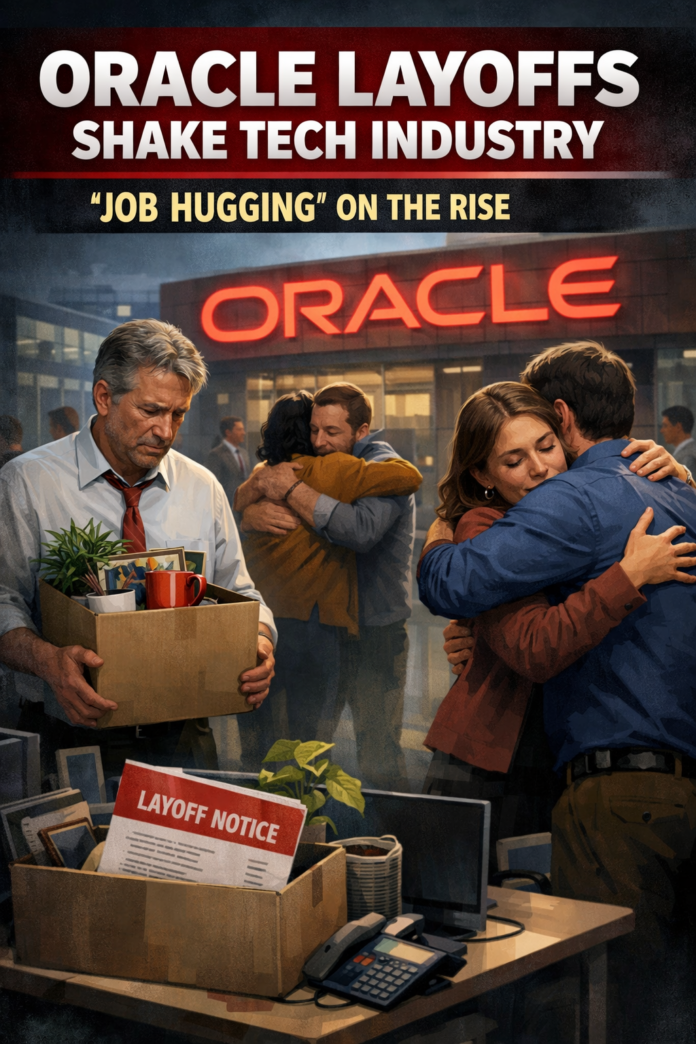
In a sweeping restructuring move that is reshaping the global tech landscape, Oracle Corporation has initiated large-scale layoffs, sending ripples across key markets including the United States and India. The development underscores a deeper transition within the industry—where aggressive investment in artificial intelligence (AI) is beginning to directly influence workforce strategies.
Massive Job Cuts Amid AI Push
According to industry estimates, Oracle’s layoffs could affect thousands of employees across multiple verticals, including cloud services, sales, and support functions. The decision is part of a broader corporate pivot toward AI-driven infrastructure, automation, and next-generation cloud platforms.
Sources indicate that impacted employees were informed through sudden internal communications, with many losing system access almost immediately—an approach that has sparked criticism over transparency and employee sensitivity.
The layoffs align with Oracle’s plan to channel billions into AI expansion, data centers, and enterprise cloud capabilities, signaling a shift from traditional workforce-heavy models to lean, technology-first operations.
India Impact: Tech Hubs Feel the Heat
India, a crucial talent base for global tech firms, is among the regions witnessing the impact. Cities such as Bengaluru, Hyderabad, and Pune are expected to see significant workforce reductions, particularly in backend operations and mid-level roles.
For many professionals, the layoffs have triggered concerns about job security, career sustainability, and the long-term impact of AI on employment—especially in roles vulnerable to automation.
Emotional Fallout: Beyond Pink Slips
The layoffs have also highlighted the human cost of corporate restructuring. Employees have reported feelings of uncertainty, stress, and professional identity loss, as stable tech careers become increasingly unpredictable.
Industry observers note that such abrupt job cuts are contributing to a growing sense of “employment fragility”, where even high-performing professionals feel expendable in a rapidly evolving digital economy.
“ Job Hugging ”: The Silent Workplace Shift
Parallel to the layoffs, a new workplace behavior is emerging—“job hugging.”
This trend reflects a growing number of employees choosing to stay put in their current roles, even when faced with limited growth, dissatisfaction, or stagnant salaries.
Why Employees Are Holding On
- Layoff anxiety: High-profile job cuts are discouraging risk-taking
- Cooling job market: Fewer opportunities make switching risky
- AI uncertainty: Fear of role redundancy is increasing
- Stability over ambition: Security is becoming the top priority
Unlike the post-pandemic phase that celebrated frequent job changes, today’s workforce is becoming cautious, calculated, and retention-focused.
From Job Hopping to Job Holding
The rise of job hugging marks a clear departure from the earlier era of aggressive career mobility. Employees are now prioritizing consistency over rapid growth, reflecting a broader psychological shift in workplace expectations.
While this trend may benefit companies through reduced attrition, it also raises concerns about:
- Lower innovation and creativity
- Decreased employee engagement
- Slower career progression across industries The Bigger Picture: AI vs Employment
Oracle’s layoffs are part of a wider pattern across global tech firms, where AI investments are increasingly replacing traditional roles. As automation becomes more sophisticated, companies are rethinking workforce structures to stay competitive.
However, this transformation also raises critical questions:
- Will AI create enough new jobs to offset losses?
- How can professionals future-proof their careers?
- Are companies balancing innovation with responsibility?
A Defining Moment for the Workforce
The developments at Oracle Corporation highlight a turning point in the modern workplace. As organizations accelerate toward AI-driven futures, employees are responding with caution—choosing stability in uncertain times.
The rise of “job hugging” is not just a trend—it’s a reflection of a workforce adapting to volatility, disruption, and a redefined idea of career security.