

Image Source www.reuters.com
In Indian politics, victory and defeat are rarely final—they are often stepping stones in a longer ideological and electoral journey. The current political climate reflects this dynamic, as the ruling Bharatiya Janata Party (BJP) projects confidence on its electoral successes, while the opposition sharpens its narrative through mass outreach campaigns like the Bharat Jodo Yatra.
Prime Minister Narendra Modi has consistently framed electoral victories as a mandate for stability, development, and continuity. Addressing party workers recently, he emphasized that every win strengthens governance reforms, while losses serve as lessons to reconnect with the grassroots. The BJP’s internal messaging highlights resilience—treating setbacks not as failures but as opportunities to recalibrate strategy.
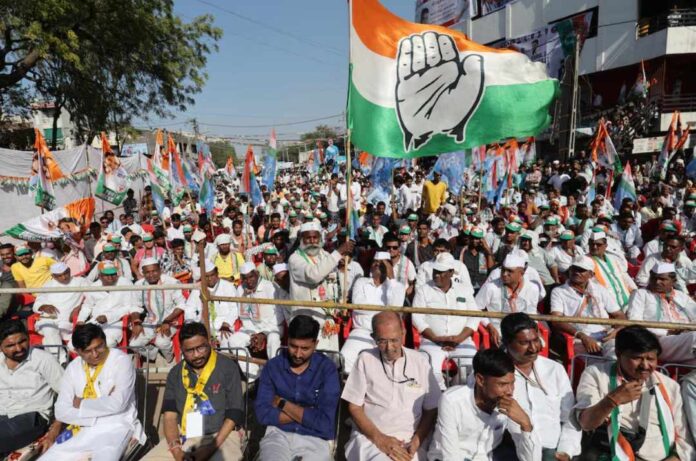
On the other side, the opposition—led prominently by the Indian National Congress—has sought to redefine political engagement beyond election results. Senior leader Rahul Gandhi has positioned the Bharat Jodo Yatra as a movement aimed at addressing social divisions, economic distress, and what the party describes as challenges to democratic institutions.
The Yatra, which traversed multiple states and connected with diverse communities, has become a symbolic counterpoint to the BJP’s electoral narrative. Congress leaders argue that while elections determine governments, public movements shape the moral and social direction of the country. Party president Mallikarjun Kharge has echoed this sentiment, stating that “the fight is not just for power, but for the idea of India.”
Political observers suggest that the contrast between the BJP’s focus on governance outcomes and the opposition’s emphasis on social unity reflects two distinct approaches to politics. For the BJP, winning elections validates policy direction and leadership. For the Congress and its allies, even electoral losses can be reframed as part of a broader ideological struggle.
Interestingly, both sides acknowledge the importance of public perception. The BJP continues to leverage its organizational strength and communication machinery, while the Congress is investing in grassroots mobilization and narrative-building exercises like the Bharat Jodo Yatra.
As India heads toward future electoral contests, the interplay between victory, defeat, and political storytelling will remain crucial. In a democracy as vast and diverse as India, winning an election may secure power—but shaping the narrative often determines long-term influence.